
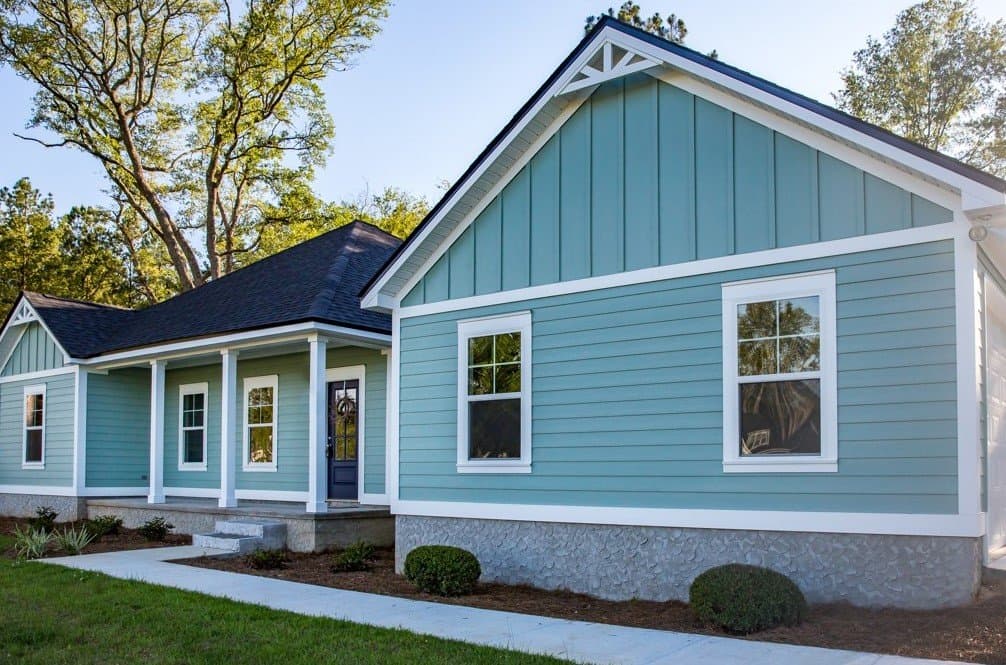
Professional Siding Installation & Replacement
Vinyl, fiber cement, and wood siding installation and replacement. Protect your home from Minnesota's freeze-thaw cycles.
Siding Services in the Twin Cities
Total Home Exteriors installs and replaces siding across the Twin Cities metro from our base in Andover, MN. We work in vinyl, fiber cement (James Hardie), engineered wood, and steel. For Minnesota homes we most often recommend fiber cement, because it resists the freeze-thaw damage that splits and warps lesser materials and needs very little maintenance once installed. Vinyl remains the value option and performs well when it is installed with proper expansion allowance. Full replacement is warranted when warping, rot, fading, or water intrusion is widespread; isolated damage across a few panels can usually be repaired instead. Siding inspections and estimates are free, and all work is done by a licensed, insured crew.
We have re-sided Twin Cities homes through twenty Minnesota winters and see first-hand which products survive the freeze-thaw cycle. Last updated: September 2026.
Which siding material is best for a Minnesota home?
Fiber cement is the strongest all-round choice for this climate. It does not warp or crack through freeze-thaw cycling, it holds paint for a long time, and it is not appetising to pests. The trade-offs are weight and cost — it needs a crew that knows how to hang it correctly.
Vinyl is the value option and it works, provided it is installed with correct expansion gaps. Vinyl moves a lot between a January morning and a July afternoon in Minnesota; installed too tight, it buckles. Most of the failed vinyl we replace failed on installation, not on material.
Engineered wood gives the look of real wood with better moisture stability, and steel is worth considering where hail is a repeated problem. We walk you through all four rather than quoting one.
Do I need new siding or just siding repair?
Repair the siding when damage is localised — a few panels cracked by a ladder or a stray branch, one section of trim rotted where a gutter overflowed. Replace it when problems repeat across elevations: widespread warping, soft or rotted board, chalky fading that no longer takes paint, or water finding its way behind the cladding.
Water intrusion is the finding that changes the answer fastest. Once moisture is getting behind siding, the sheathing and framing underneath are on a clock, and patching the visible panel does not stop what is happening behind it. Our inspection checks the wall assembly, not just the surface.
What does siding replacement involve?
We remove the existing cladding, inspect the sheathing and house wrap underneath, repair any compromised structure, install a proper weather-resistive barrier, then hang the new siding with the flashing and trim details that keep water out at windows, doors and penetrations.
The flashing details are where most siding jobs are quietly won or lost. Siding that looks perfect but is flashed badly at a window head will leak, and you will not see it until the damage is structural.
How much does siding replacement cost in the Twin Cities?
The material sets the floor and the house sets the rest. Wall area, the number of storeys, how much trim and detail there is around windows and doors, whether scaffolding is needed, and what condition the sheathing underneath turns out to be in all move the final figure. A simple two-storey box costs far less per square foot than a house with dormers, bays and heavy trim.
Fiber cement costs more than vinyl to buy and materially more to hang, because it is heavy and unforgiving of a sloppy install. That gap is the honest trade-off: you are paying for a material that will not warp or crack through freeze-thaw, and for the crew hours to install it correctly.
Why do siding jobs fail, and what stops it?
Almost always water, and almost always at the flashing rather than the field of the wall. Siding that looks perfect but is badly flashed at a window head, a deck ledger or a roof-to-wall intersection will let water behind it, and you will not know until the sheathing or framing is damaged.
The other common failure is vinyl installed too tight. Vinyl moves substantially between a January morning and a July afternoon in Minnesota, and nailed without the expansion gap it buckles and waves within a couple of seasons. Most of the failed vinyl we replace failed on installation, not on material.
Can siding be installed during a Minnesota winter?
It depends on the material. Vinyl becomes brittle in deep cold and is best left for milder weather, because cutting and nailing it below freezing risks cracking. Fiber cement and steel tolerate a much wider temperature range and are routinely installed through the colder months.
There is a real advantage to booking winter work: schedules are less congested than the summer rush. If your siding is failing and letting water in, waiting until June to protect the wall is usually the wrong call — we will tell you honestly whether yours can wait.
Siding materials for Minnesota homes
| Material | Freeze-thaw durability | Maintenance | Notes |
|---|---|---|---|
| Fiber cement | Excellent — does not warp or crack | Repaint on a long cycle | Our usual recommendation here. Heavy, and needs a crew that knows how to hang it. |
| Vinyl | Good if installed with proper expansion gaps | Essentially none | The value option. Most failures we replace were installation faults, not material faults. |
| Engineered wood | Good — better moisture stability than real wood | Periodic repaint or seal | Wood appearance without the same rot risk. |
| Steel | Excellent, and resists hail denting well | Very low | Worth considering where hail is a repeated problem. |
What happens when you call us
Free inspection
We assess the wall assembly, not just the surface — checking for signs water is already getting behind the cladding.
Material walkthrough
We go through all four materials with you rather than quoting one, and match the recommendation to the house and the budget.
Tear-off and inspection
The old cladding comes off and we inspect the sheathing and house wrap underneath. Anything compromised is shown to you before it is covered.
Weather barrier and flashing
A proper weather-resistive barrier goes on, then the flashing details at windows, doors and penetrations — where siding jobs are genuinely won or lost.
Installation and cleanup
New siding and trim installed to the manufacturer's spec, then a full site cleanup.
Related reading
Frequently Asked Questions
Take Action Today
Ready for Your Siding Estimate?
Free, no-pressure inspections for homeowners across the Twin Cities metro.