
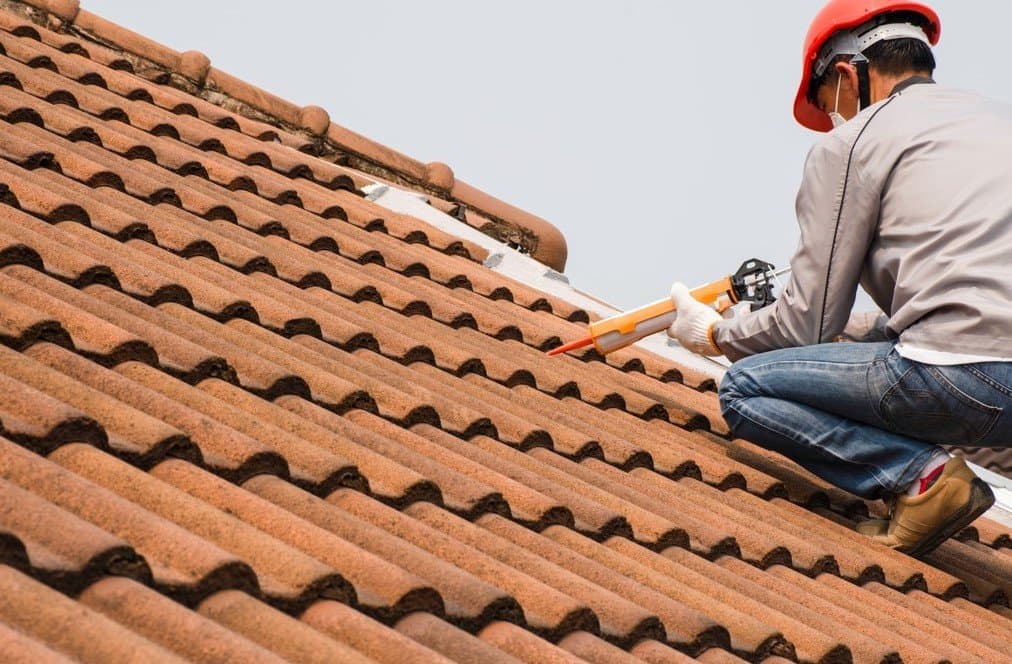
Should you repair or replace your roof? Repair when the damage is contained to one area and the roof still has meaningful service life — a handful of shingles lost to wind, a single flashing leak at a chimney, isolated granule loss on one slope. Replace when the roof is near the end of its life, when damage crosses multiple slopes, when the decking underneath is compromised, or when you are repairing the same roof for the second or third time. The practical test is age plus extent. An asphalt roof in Minnesota gives 20 to 25 years; past fifteen with damage on more than one slope, patching usually buys a season or two and you pay for the tear-off anyway.
Chad Erickson founded Total Home Exteriors in Andover, MN in 2003 and still walks every insurance claim personally. Last updated: September 2026.
When should you repair a roof instead of replacing it?
When damage is contained to one area, the roof is comfortably within its service life, and the decking underneath is sound. Isolated wind damage, a single flashing leak, or a few cracked shingles are repairs — not reasons to replace a roof with ten good years left.
When does a roof need full replacement?
When it is near end of life, when damage spans multiple slopes, when decking is soft or sagging, or when you are repairing the same roof repeatedly. Widespread hail bruising also warrants replacement, because every shingle on that elevation has had its life shortened at once.
Is patching a roof a waste of money?
Not when the roof has years left — a flashing repair on a ten-year-old roof is money well spent. It becomes a waste when it is the third patch on a twenty-year-old roof, because each one buys a season and you still pay for the tear-off.
The age-plus-extent test
Two questions settle most cases. How old is the roof, and how many slopes does the damage touch? A young roof with damage in one place is a repair. An old roof with damage in several places is a replacement. The genuinely difficult cases sit in the middle — a fifteen-year-old roof with damage on two slopes — and that is where an honest inspection earns its keep.
The thing that overrides both is the decking. If the sheathing beneath the shingles has been wet long enough to go soft, no amount of surface repair helps, because the new shingles are being nailed to compromised wood.
What repeated repairs actually cost you
Each repair has a fixed overhead: a crew mobilised, materials bought in small quantity, access set up. Three repairs across four years frequently add up to a meaningful fraction of a replacement, and at the end of them you still own the same old roof.
There is also a compounding risk. Every season a marginal roof stays on is another Minnesota winter of freeze-thaw and ice dams working on it, and the damage that started at the surface migrates into the decking and insulation — which turns a roofing job into a roofing-plus-carpentry-plus-insulation job.
How insurance changes the answer
If a storm caused the damage, the calculation shifts. Insurers scope repairs and replacements differently, and widespread hail bruising across elevations generally supports replacement rather than repair — because the damage is not localised, even though nothing has failed yet.
This is why documentation matters so much on storm work. A scope built from one slope can miss damage that would have justified a full replacement, and the difference between the two outcomes is substantial for the homeowner.
Related reading
Frequently asked questions
Can you replace just one slope of a roof?
Technically yes, and occasionally it is the right call — for example where an addition has a much newer roof than the original house. The drawbacks are visible: new and aged shingles rarely match, and the untouched slopes will need replacing on their own timeline, meaning a second mobilisation and a second bill.
Will a repair match my existing shingles?
Closely, rarely exactly. Shingles fade with UV exposure, so new material set beside a ten-year-old roof will be visibly newer for a while before it weathers in. On a highly visible elevation that is worth knowing before the work, not after.
Does a repair void my roof warranty?
A repair done properly by a licensed contractor generally does not void a manufacturer warranty, though a poor repair can. What more commonly invalidates these warranties is inadequate attic ventilation, which is a condition of most manufacturer coverage and is worth checking before you rely on it.
How do I know if the decking is damaged?
From above, soft or spongy areas underfoot and any visible sag in the roof line. From inside the attic, dark staining on the underside of the sheathing, delaminating plywood, or daylight through the boards. Any of those move the answer firmly toward replacement.
Have Questions?
Our team is happy to answer questions about any service — no sales pressure.
Take Action Today
Serving the Twin Cities for 20+ Years
Licensed, insured, and ready to help with your next exterior project.