
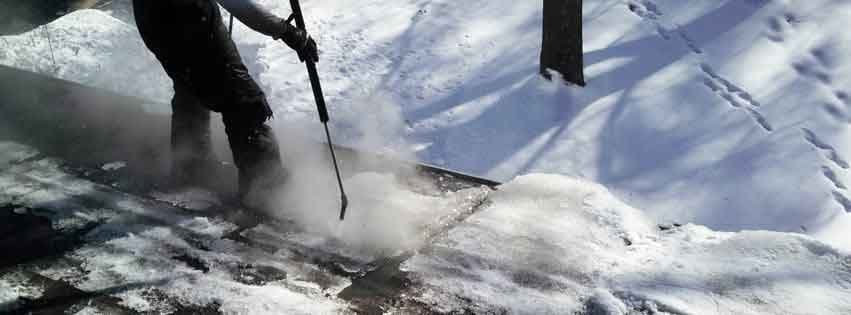
Safe Low-Pressure Ice Dam Removal
Fast, safe ice dam removal using low-pressure steam. Protects your roof shingles and prevents interior water damage.
Ice Dam Steaming in the Twin Cities
Total Home Exteriors removes ice dams from Twin Cities homes using low-pressure steam. Steam is the only method that melts through an ice dam without damaging the roof: chipping with hammers, axes, or picks cracks shingles, and pressure washers strip granules and force water under the roofing. Ice dams form when heat escaping into the attic melts snow on the roof deck, and that meltwater refreezes at the cold eave where there is no heat below. The resulting ice ridge backs water under the shingles and into ceilings and walls. Steaming removes the ice safely and quickly, but a house that dams every winter has an attic insulation and ventilation problem underneath, which is the part actually worth fixing.
We steam Twin Cities roofs through the worst weeks of a Minnesota winter and see which houses come back on the list every single year. Last updated: September 2026.
Why is steam the only safe way to remove an ice dam?
Steam melts ice at low pressure, so it releases the dam without touching the roof surface underneath. Nothing strikes the shingles and nothing is forced beneath them.
The alternatives all cause damage. Chipping with an axe, hammer, or ice pick cracks cold asphalt shingles, which are brittle at winter temperatures. A pressure washer blasts granules off the shingle surface and drives water up under the courses — you clear the ice and create the leak. Salt and chemical pucks damage shingles, gutters, and the landscaping below. If someone quotes you ice dam removal without steam, that is a reason to keep calling.
What causes ice dams in the first place?
Heat loss. Warm air escaping from the living space into the attic warms the underside of the roof deck. Snow sitting on that warmed deck melts, the water runs down the slope, and when it reaches the eave — which overhangs unheated space and stays at outside temperature — it refreezes. Repeat that over several days and you build a ridge of ice that traps meltwater behind it.
That trapped water then finds its way under the shingles, because roofing is designed to shed water flowing downhill, not to hold back a standing pool. From there it reaches the sheathing, the insulation, the ceiling, and eventually the wall.
How do I stop ice dams coming back every winter?
Air seal the ceiling plane, bring the attic insulation up to the R-49 to R-60 range recommended for Minnesota, and confirm that soffit and ridge ventilation is actually moving cold outside air under the roof deck. The goal is a cold attic and a cold roof deck, so snow does not melt in the first place.
Steaming is emergency care. If we are steaming your roof for the third winter running, we are treating a symptom and you are paying for it repeatedly. Our insulation service exists to end that cycle.
How urgent is an ice dam?
It depends on whether water is already coming in. An ice ridge at the eave with no interior signs is a problem to solve soon, not tonight. Water staining on a ceiling, damp patches on an exterior wall, or icicles forming inside a soffit means water is already getting past the roofing and into the structure — that is urgent.
The damage that costs real money is rarely the ice itself. It is the saturated insulation that stops insulating, the stained and sagging drywall, and the framing and sheathing that stay wet through a Minnesota February.
What can I safely do myself before you arrive?
Pull snow off the lower few feet of the roof with a roof rake from the ground if you have one and can do it safely. Removing the snow removes the meltwater supply feeding the dam, and it is the one genuinely useful thing a homeowner can do without risk.
What not to do: do not get on the roof, do not chip at the ice with anything, and do not put a ladder up onto an ice-covered eave. Falls from ladders in winter are how people get seriously hurt dealing with ice dams, and the damage a hammer does to cold shingles costs more than the steaming would have.
Do heat cables solve ice dams?
They manage a symptom, and only partly. Heat cable melts a channel through the ice so meltwater has somewhere to drain, which can prevent water backing up under the shingles. It does not stop the dam forming, and it runs on your electricity all winter.
They have a legitimate place on a roof geometry that genuinely cannot be fixed any other way — a north-facing valley over an unheated entry, for example. As a substitute for fixing attic heat loss on an ordinary roof, they are an expensive way to avoid the actual repair.
What happens when you call us
Call and triage
We ask whether water is coming in. If it is, you go to the front of the queue — that is the difference between an inconvenience and a repair bill.
Low-pressure steaming
Steam melts a channel through the dam and releases it without touching the shingles. Nothing strikes the roof and nothing is forced under it.
Drainage restored
We clear the gutter line and downspouts so meltwater has somewhere to go, rather than backing up behind whatever ice remains.
Cause assessment
While we are there we look at what caused it — attic insulation depth, air sealing and whether the soffit vents are actually clear.
A plan for next winter
If your house dams every year we tell you what it would take to stop it, so you are not paying us to steam the same roof annually.
Frequently Asked Questions
Take Action Today
Ready for Your Ice Dam Steaming Estimate?
Free, no-pressure inspections for homeowners across the Twin Cities metro.