
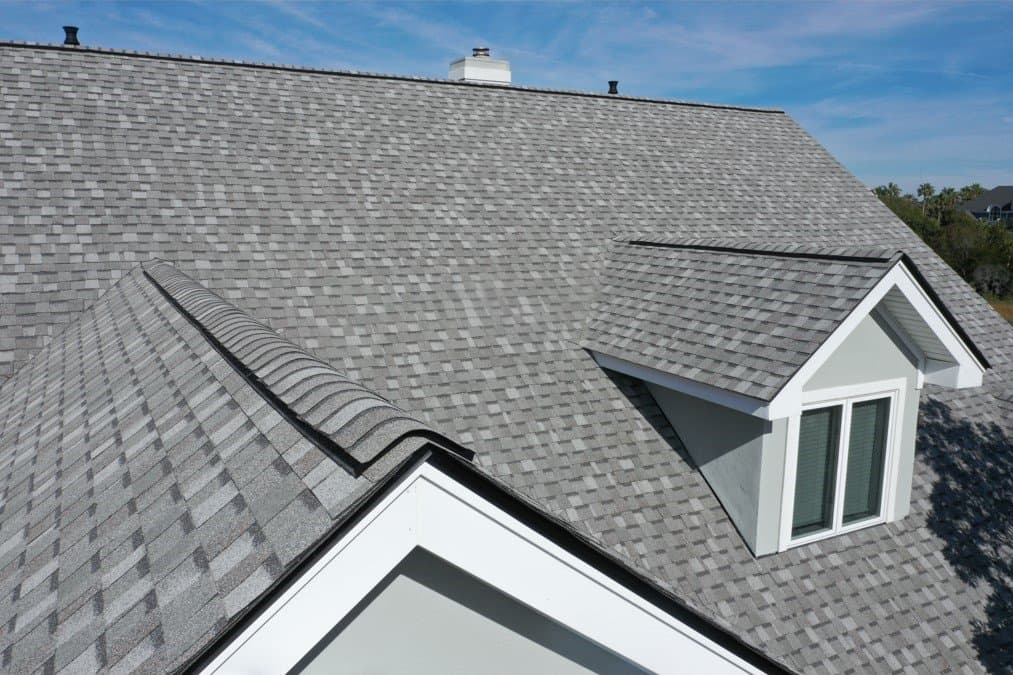
What is the best roofing material for a Minnesota home? Architectural asphalt shingles are the default for good reason: they tolerate freeze-thaw cycling, they are straightforward and cheap to repair, replacement material stays available for decades, and they give 20 to 25 years here. Standing-seam metal is the long-life alternative at 40 to 70 years, sheds snow rather than holding it, and resists hail denting — but costs substantially more and fewer crews install it correctly. Three-tab asphalt is the budget option at 15 to 20 years and is common on builder-grade homes. Whatever goes on top, the parts that actually fail first in Minnesota are attic ventilation and the ice-and-water underlayment at the eaves.
Chad Erickson founded Total Home Exteriors in Andover, MN in 2003 and still walks every insurance claim personally. Last updated: September 2026.
What is the best roofing material for Minnesota?
Architectural asphalt for most homes — good freeze-thaw tolerance, easy repair, 20 to 25 years. Standing-seam metal where you want 40 to 70 years and better snow and hail performance, at a considerably higher cost.
Does the shingle brand matter much?
Less than homeowners expect. Within the architectural asphalt tier the major manufacturers perform comparably. Installation quality, attic ventilation and ice-and-water coverage at the eaves affect how long the roof lasts far more than which brand is stamped on the bundle.
What roofing material handles hail best?
Metal, clearly. It dents where asphalt fractures — a dented panel is cosmetic and still sheds water, while a bruised asphalt shingle has a broken mat and a shortened life. Impact-rated asphalt shingles are a middle option worth asking about in hail-prone areas.
Why ventilation outranks the material choice
A roof is a system, and the shingle is only its outer layer. Without adequate intake at the soffits and exhaust at the ridge, the attic becomes hot and humid in summer and warm in winter. Summer heat cooks the asphalt from underneath and drives off the oils that keep it flexible; winter warmth melts snow on the deck, and that meltwater refreezes at the cold eave as an ice dam.
The consequence is that a premium shingle over a badly ventilated attic will underperform a mid-grade shingle over a well-ventilated one. It is also why manufacturers can decline warranty claims where ventilation was inadequate — they know exactly what it does.
What ice-and-water shield is, and why it matters here
Ice-and-water shield is a self-adhering membrane laid on the decking before the shingles, and it seals around the nails driven through it. Its job is to stop water that gets behind the shingles — as it does whenever an ice dam forms — from reaching the decking.
Minnesota building code requires it at the eaves, and how far up the roof it runs is a genuine differentiator between quotes. Extending coverage in valleys and around penetrations costs relatively little at install time and is the difference between an ice dam being an inconvenience and being a ceiling repair.
Cedar, tile and the materials to think twice about
Cedar shakes look superb and carry real maintenance and fire considerations, and in this climate they need consistent upkeep to reach their rated life. Concrete and clay tile are heavy enough that most Minnesota homes need structural assessment before they can carry them, and they are uncommon here for that reason.
None of these are wrong choices, but they are specialist ones. The question to ask is who locally installs and repairs them — a material that nobody in the metro services well is a difficult thing to own.
Roofing materials for Minnesota homes
| Material | Service life | Cost | Best suited to |
|---|---|---|---|
| Architectural asphalt | 20-25 years | Moderate | Most Twin Cities homes |
| Three-tab asphalt | 15-20 years | Lowest | Budget and rental property |
| Impact-rated asphalt | 20-25 years | Moderate-high | Repeated hail exposure |
| Standing-seam metal | 40-70 years | Highest | Long-term ownership, heavy snow |
Related reading
Frequently asked questions
What are impact-rated shingles?
Shingles tested for resistance to impact and given a Class 1 to Class 4 rating, with Class 4 the most resistant. They cost more than standard architectural shingles and can attract an insurance discount with some carriers. In a part of the metro that takes repeated hail, they are worth pricing out.
Can I put a new roof over the old one?
Some jurisdictions allow a second layer, but we generally advise tear-off. Going over the old roof hides the decking condition, adds weight, and makes it impossible to install ice-and-water shield properly or to spot damage that is already progressing underneath.
Do darker shingles make a house hotter?
Marginally, and attic ventilation matters far more than colour. A well-ventilated attic under dark shingles will run cooler than a poorly ventilated one under light shingles. Choose the colour you want the house to have, then make sure the attic breathes.
How much does shingle colour affect resale?
Less than the roof's age and condition, which is what buyers and their inspectors focus on. That said, a colour that fights the architecture is noticeable from the street, so it is worth taking a moment over on a home you may sell.
Have Questions?
Our team is happy to answer questions about any service — no sales pressure.
Take Action Today
Serving the Twin Cities for 20+ Years
Licensed, insured, and ready to help with your next exterior project.